REGENERATION AND PURIFICATION OF TRANSFORMER OILS
Regeneration of transformer oil at the site of transformer operation is an important element of transformer maintenance.
The service life of a transformer is determined by the lifespan of its insulation system. The most commonly used insulation system is transformer oil (liquid insulation), along with solid insulation (paper, wood, i.e., cellulose products). Insulating oil provides nearly 80% of the transformer’s electrical strength. Most transformer failures (almost 85%) occur due to damage to the insulation system.
Processes of Transformer Oil Aging
Aging or deterioration of insulating oil is usually associated with oxidation. When oxygen and water are present in the oil, the insulating oil oxidizes even under ideal conditions. The condition of the oil is also affected by contaminants from the transformer’s solid materials, which dissolve in the oil. Reactions between unstable hydrocarbons, oxygen, and water (moisture), accelerated by heat, lead to oil decomposition (oxidation).
Heat and moisture, combined with oxidation, are the main enemies of solid insulation. With proper maintenance of the cooling and insulation systems, the lifespan of the insulation system can be extended to 40–60 years. Oxidation of oil cannot be completely eliminated, but it can be controlled (slowed) through maintenance procedures.
Annual oil testing is one of the key elements of transformer maintenance. Oil analysis allows evaluation of the state of the transformer’s insulation system. Oil moisture consists of free water, water dissolved in oil decomposition products, and chemically bound water (part of the molecular structure of cellulose). Complete removal of moisture from insulating cellulose is impossible.
Transformer oil absorbs more moisture at high temperatures than at low temperatures. When a mixture of oil and water cools, water precipitates. This water is absorbed by the insulation or retained by oil decomposition products. Insulating paper absorbs water and retains it in areas of highest voltage. It is very important to remove moisture and maintain low insulation humidity. Moisture accelerates aging: insulation with 1% moisture ages ten times faster than with 0.1% moisture.
Contamination occurs during transformer wear. Acids formed during oxidation attack cellulose and metals, forming metallic soaps, aldehydes, and alcohols, which settle as acidic sludge on insulation, tank walls, breathing systems, and cooling systems. Contamination develops faster under high load, overheating, or improper transformer operation. Contaminants increase oil viscosity, reduce its cooling capacity, and shorten transformer service life.
Contaminants lead to insulation shrinkage, degradation of varnishes and cellulose materials. They also conduct discharges and currents, absorb moisture, and cause overheating of the insulation system. Sludge deposits on the core, increases transformer temperature, and may cause inter-turn short circuits.
Oxidation processes in transformer oil combined with contamination significantly degrade physical and chemical properties of oil, creating conditions for electrical breakdown, which usually leads to transformer failure. Repair in such cases is very costly and can equal the cost of a new transformer.
Transformer oil can be fully restored to new-oil specifications!
The service life of insulating oil, with proper maintenance, is practically unlimited. Regeneration of heavily oxidized oil is economically far more advantageous than purchasing new oil.
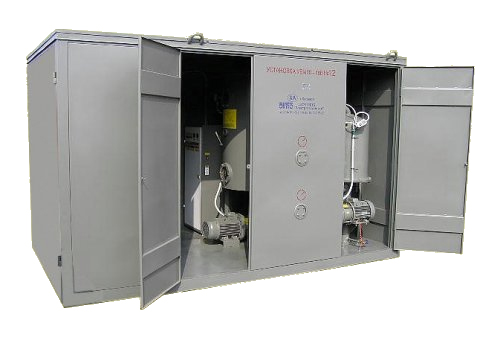
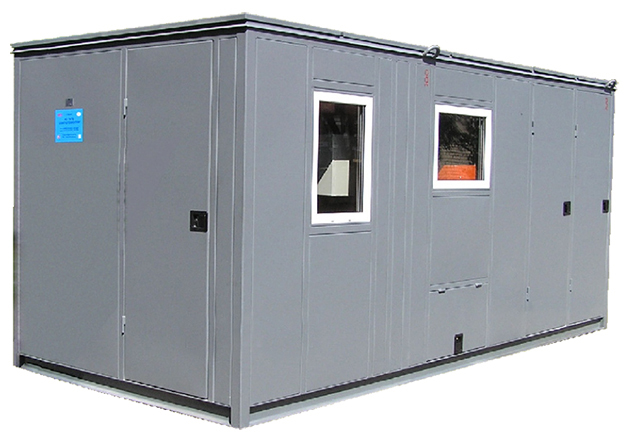
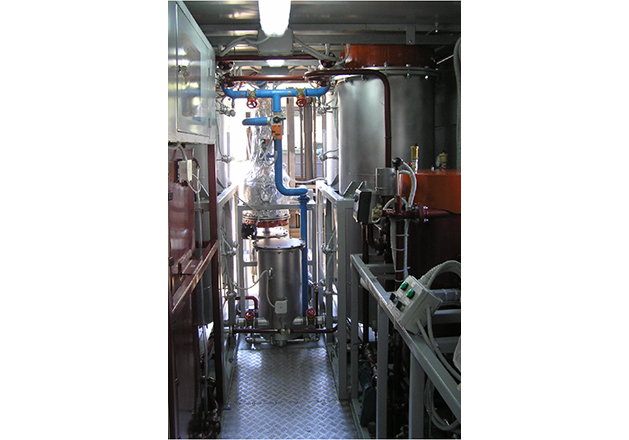
«SMART ENERGY SERVICE» LLC performs regeneration and purification of transformer oils of any brand directly at the transformer installation site. Modern equipment includes vacuum treatment degassing units and transformer oil regeneration systems.
| Transformer Oil Parameters After Treatment
|
Value |
| Acid Number | 0.01 KOH/g (max, GOST 5985) |
| Dielectric Loss Tangent (tg δ)
|
0.5% at 90°C (max, GOST 6581)
|
| Moisture Content
|
0.001% (10 g/t) (max, GOST 7822)
|
| Mechanical Impurities Content
|
8 g/t (max, GOST 6370)
|
| Ionol Content
|
0.3% (min)
|
| Purity Class
|
9 or better (GOST 17216)
|
| Breakdown Voltage
|
70 kV (min, GOST 6581)
|
| Filtration Fineness
|
5 µm
|
| Nitrogen Content After Nitriding
|
8.5 ± 0.5%
|
| Volumetric Gas Content
|
0.1% (max)
|